The crystal radio is where broadcast listening began. For a few years in the early 1920s, before valves became affordable, a lump of mineral, a coil of wire and a pair of headphones was how millions of people first heard music arrive through the air.
A rock that hears radio
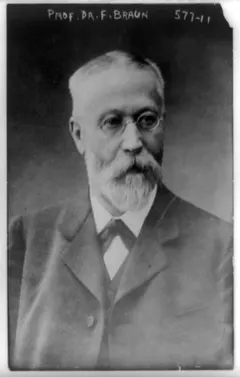



In 1874 Karl Ferdinand Braun noticed something odd: a fine metal point pressed onto certain crystals conducted electricity better one way than the other. It took radio to give that oddity a job. A one-way contact could turn a radio wave into sound you could hear (the detection explainer shows how).
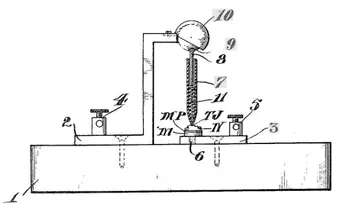

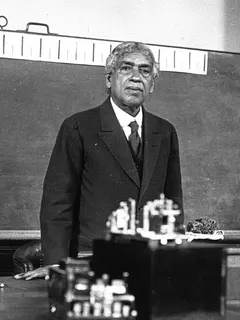
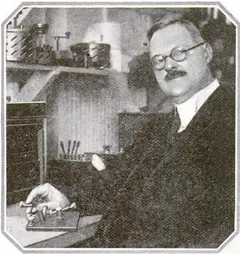
By the 1900s experimenters were testing every mineral they could find. Greenleaf Whittier Pickard reportedly tried thousands of them before patenting silicon in 1906. In India, Jagadish Chandra Bose had already used galena to detect radio waves in the 1890s.
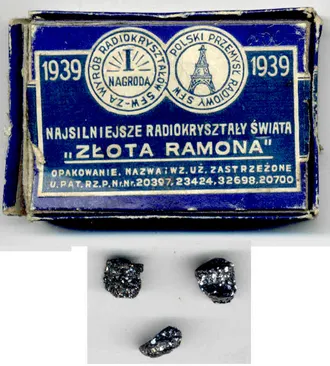
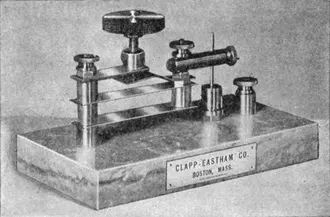
The favourite was galena, lead sulfide: a heavy, silver-grey mineral that forms shiny cubes. It was cheap and sensitive, but only in places. Listeners touched it with a springy wire called the cat’s whisker and hunted around for a “hot spot”.


Try it yourself:
Try it · Find a hot spot
Move the whisker onto the crystal.
Only certain spots on a real crystal work as a detector, and a knock on the table could lose the spot.
The 1920s boom
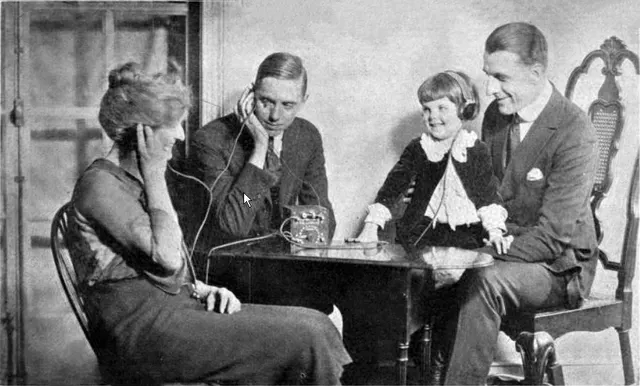

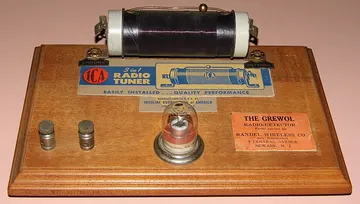
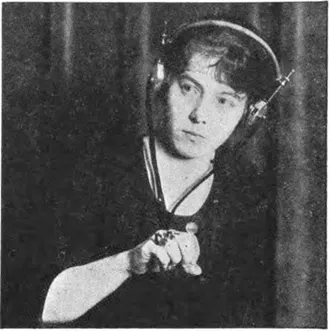
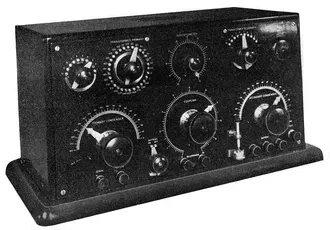
When scheduled broadcasting arrived in 1920, crystal sets were the cheapest way to listen. Many were home-built from magazine plans: a coil wound on a cardboard tube, a slider or tapped switch, a galena detector in a little glass case, and a pair of high-impedance headphones. Sets had no loudspeaker, because a crystal set can’t drive one.

Crystal receivers weren’t only toys. Ships and armies used professional crystal sets well into the 1920s, with separately tuned circuits for sharper selectivity: the same idea as our high-performance set.


The government’s radio guide
In 1922 the US Bureau of Standards was swamped with letters asking how to build a receiver. Its answer, Circular 120, explained how to make a complete crystal set from an oatmeal box, wire, a crystal and a pair of headphones. It sold for five cents, at a time when a factory-made radio could cost the equivalent of more than $2,000 today. Part of the point was farming: the Department of Agriculture had started broadcasting crop prices, and farmers needed a way to hear them.
Thousands of orders came in from every state, and newspapers reprinted the whole circular. A later Bureau history put its appeal simply:
“The circular showed how almost any family having a family member handy with simple tools could make a radio.”
For years afterwards oatmeal boxes were the standard coil form, and collectors still find home-built sets made from its plans in attics. You can build it yourself: the 1922 oatmeal-box radio.
By the end of the decade, valve radios with loudspeakers had taken over the living room. The crystal set became what it still is today: a first project, a classroom demonstration and a hobby. Children kept building them for a reason the engineer John Lienhard remembered from the 1930s: with your own set and earphones, you could listen under the covers after your mother had said goodnight.
Foxhole radios
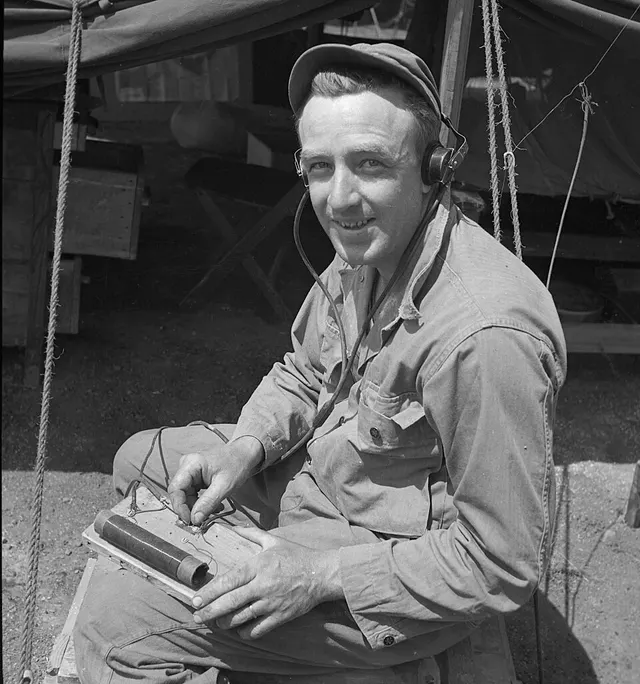

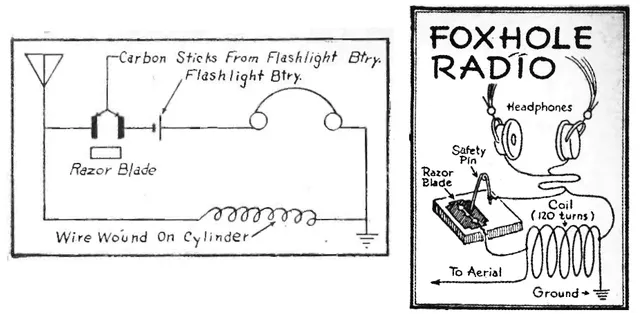
In the Second World War, valve radios were discouraged at the front: their circuits leak a faint signal of their own, which the enemy could detect. A crystal set emits nothing. So soldiers improvised receivers from whatever they had. A blued razor blade stood in for the crystal, and a pencil lead or safety pin for the cat’s whisker. With a coil wound on a toilet-paper tube or a tin can and a scrounged headset, they could pick up nearby stations.

Kits and rocket radios
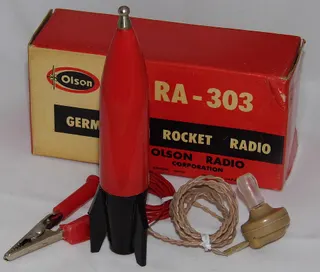

After the war, cheap germanium diodes made the crystal set easy. No more hunting for a hot spot: the detector simply worked. Heathkit, the American electronics-kit company, sold a CR-1 crystal radio kit from about 1957 to 1962; it is now a collector’s item.
From Japan came pocket germanium radios shaped like rockets. Pulling the nose cone in and out moved a core inside the coil to tune it, and a crocodile clip on a long lead served as the antenna: children clipped it to a bedspring, a window frame or a fence.
From cat’s whisker to transistor
The crystal detector never really went away. Radar in the Second World War needed fast, reliable detectors, and research into purified silicon and germanium crystals produced the first modern diodes, the ancestors of the 1N34A in your crystal set. At Bell Labs in 1940, Russell Ohl’s study of silicon detectors turned up the p–n junction.
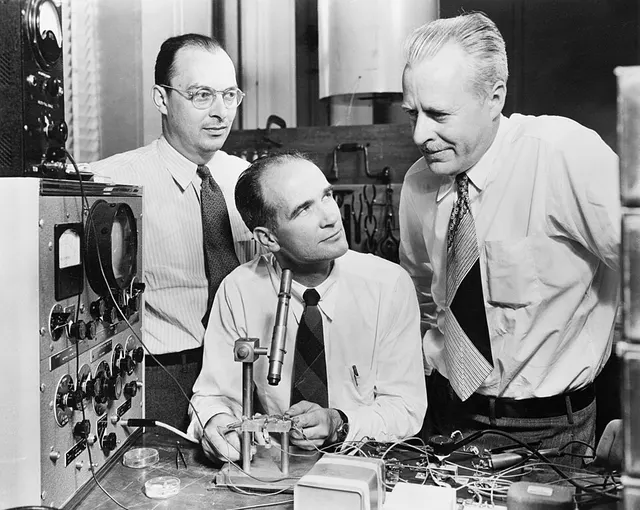

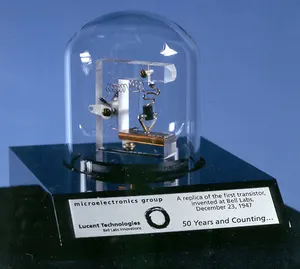

In December 1947, John Bardeen and Walter Brattain demonstrated the first transistor: a germanium crystal touched by two closely spaced gold contacts. It was, in effect, a cat’s whisker that amplified.
Timeline
- 1874
Karl Ferdinand Braun finds that certain metal–crystal contacts conduct better in one direction than the other. Nobody has a use for it yet.
- 1890s
Jagadish Chandra Bose experiments with galena and other crystals as detectors of electromagnetic waves, and patents a galena detector in 1904.
- 1906
Crystal detectors are patented in the US: silicon by Greenleaf Whittier Pickard, carborundum by Henry Dunwoody.
- 1920
Scheduled public broadcasting begins. KDKA in Pittsburgh is usually counted first, with the US election results that November.
- 1922
The US Bureau of Standards publishes Circular 120, a five-cent guide to building a crystal set at home. Thousands of copies are ordered.
- Early 1920s
The crystal-set boom. Magazines print plans, shops sell parts, and families gather around one pair of headphones.
- Late 1920s
Valve (tube) radios with loudspeakers become affordable. The crystal set becomes a hobby and a first project.
- 1940
Russell Ohl, studying silicon crystal detectors at Bell Labs, discovers the p–n junction: the heart of modern semiconductors.
- 1944
Soldiers, famously at Anzio, build “foxhole radios” from a razor blade, a pencil lead or safety pin, and wire.
- 1946–47
Wartime radar research yields reliable germanium diodes such as the 1N34. In 1947, Bardeen and Brattain’s point-contact transistor uses, in effect, two cat’s whiskers on germanium.
- 1950s–60s
Cheap germanium diodes turn the crystal set into a kit and a toy: Heathkit’s CR-1, and pocket “rocket” radios from Japan.
- Today
Scouts, classrooms and hobbyists still build them, and enthusiasts hold contests to hear the most distant stations with no power at all.
Image credits
Photos from Wikimedia Commons. Public-domain images need no credit, but we give one anyway. Creative Commons images are used under the licence shown.
- Dr. Ferdinand Braun, head-and-shoulders portrait, facing right LCCN96509048 George Grantham Bain Collection · Public domain
- Jagadish Chandra Bose 1926 Agence de presse Meurisse · Public domain
- Greenleaf Whittier Pickard in his Boston laboratory Interview "In Justice to the Crystal Detector" · Public domain
- Silicon crystal detector-1906-US Patent 836531 fig2 Greenleaf Whittier Pickard · Public domain
- Galena crystals for use in crystal radios Original version: Sobol2222 This version: Chetvorno · CC BY-SA 4.0
- Precision cat's whisker detector Alfred Powell Morgan · Public domain
- Marconi Type 106 crystal radio receiver Elmer Eustice Bucher · Public domain
- Crystal radio advertisement Unknown author · Public domain
- Crystal radio in finger ring Photo credit to "Pacific & Atlantic" · Public domain
- Vintage 1920s-Era Crystal Radio With Grewol Detector And ICA Radio Tuner (15401164517) Joe Haupt from USA · CC BY-SA 2.0
- Anonymous soldier with a foxhole radio, Anzio Beachhead United States Army · Public domain
- Foxhole radio circuits Hugo Gernsback · Public domain
- Replica-of-first-transistor Federal employee · Public domain
- Bardeen Shockley Brattain 1948 AT&T; photographer: Jack St. (last part of name not stamped well enough to read), New York, New York. · Public domain
- Vintage Olson Germanium Rocket Radio, Model RA-303, Made In Japan, Circa 1950s (16131523400) Joe Haupt from USA · CC BY-SA 2.0
Sources
- US Bureau of Standards, Circular 120 (1922), and Brian Belanger’s essay on it in NIST Special Publication 958 (public domain; quoted above).
- John H. Lienhard, Engines of Our Ingenuity No. 1695: Crystal Set, University of Houston (text and audio).
- Heathkit CR-1 dates: Nostalgic Kits Central.